

Joint Fusion (Arthrodesis) Surgery in East London, Essex & Surrounding Areas – Specialist Care with Mr Nurul Ahad
If you are living with severe joint pain, instability, or advanced arthritis that has not improved with other treatments, joint fusion (arthrodesis) surgery may offer long-term relief and stability. Mr Nurul Ahad, Consultant Orthopaedic Surgeon, provides expert evaluation and surgical care for patients in East London, Essex, and surrounding areas.
Joint fusion is a highly effective procedure designed to eliminate painful joint motion by permanently joining the bones of the affected joint. This can significantly reduce pain and improve function, especially in cases where other treatments have not been successful.
- Spire Hartswood Hospital:
Private Patients
- Practice Plus Group Hospital:
Private Patients
- Request an Appointment
Patients across East London and Essex benefit from:
- Comprehensive assessment of joint pain and deformities
- Personalised treatment plans tailored to your condition
- Advanced surgical techniques for joint stabilisation
- Careful pre-operative planning and post-operative support
- Rehabilitation guidance to maximise recovery and function
Whether your condition is due to arthritis, trauma, or joint instability, early specialist consultation can help determine the most effective treatment for long-term relief.
Joint fusion or arthrodesis is a surgical procedure to overcome painful joint motion and correct joint deformities. The procedure involves removal of the damaged bony ends of the joint followed by fusion of the two bones using internal fixation devices such as metal screws to hold the bones together so that the bones can eventually fuse.
Joint fusion surgery is mainly employed for the treatment of conditions such as arthritis. The procedure can be employed for the treatment of joint deformities in the spine, ankle, wrists, fingers, toes, feet, and thumbs.
As joint fusion surgery fuses the bones and prevents motion in that joint, the surgery is best suited for treating regions of the body that can still be utilised without a complete range of motion. The main objective of joint fusion surgery is to help relieve joint pain and achieve joint stability by surgically eliminating the joint.
Disease Overview
Arthritis is a general term that covers numerous conditions in which the joint surfaces wear out. Joint surfaces are covered by a smooth articular surface made of cartilage that allows pain-free movement in the joint. This surface can wear out for several reasons. When the articular cartilage wears out, the bone ends rub on one another, causing pain, swelling, stiffness, and interference with joint motion.
Indications
Joint fusion surgery is usually recommended as a last option for the treatment of severe end-stage arthritis that has not responded to conservative treatment measures such as medications or injections. The other indications include:
- Severe joint trauma or fractures
- Joint infections
- Joint instability
- Joint destruction due to tumours
- Severe joint pain affecting daily routines
Preparation
Preoperative preparation for joint fusion surgery may involve the following:
- A thorough history and physical examination
- Routine blood work and imaging
- Refraining from blood thinners, aspirin, or NSAIDs
- Informing your doctor of any allergies to medications, anaesthesia, or latex
- Refraining from solids or liquids at least 8 hours prior to surgery
- Arranging for someone to drive you home following surgery
- Signing a consent form after the risks and benefits of the surgery have been explained
Procedure
The surgery is performed under regional or general anaesthesia. A cut is made over the affected joint and the soft tissues and nerves are carefully moved aside to expose the damaged joint. The damaged articular cartilage on the end of the bones is removed, and the bones are realigned. Your surgeon may add bone grafts to fill the gaps between the joints, if necessary. The bone graft may be obtained from another part of your body (autograft), or donor tissue or synthetically manufactured tissue (allograft) may be used. Metal pins or screws are then used to keep the bones in place while they heal. This metal hardware is often left in place permanently even after the joint heals. The tissue layers and incisions are then sewn back together and then dressed with a bandage.
Postoperative Care
In general, postoperative care and recovery will involve the following steps:
- Prescription pain medications and antibiotics are provided to control pain and prevent infection.
- Application of ice bags over a towel to the surgical area may be applied to reduce postoperative pain and swelling.
- Instructions on diet, bathing, and surgical site care are given.
- You should avoid strenuous activities or lifting heavy weights for a specified duration.
- Assistive devices such as cane or walker are used to reduce stress on the treatment area and promote healing.
- A physical therapy regimen to help strengthen the joints and optimise their function is prescribed.
- A periodic follow-up appointment will be scheduled to monitor your progress.
Risks and Complications
Joint fusion surgery is a relatively safe procedure; however, as with any surgery, some risks and complications may occur, such as:
- Infection
- Persistent pain
- Damage to nerves and vessels
- Failure to fuse
- Malunion
- Broken hardware
- Graft migration
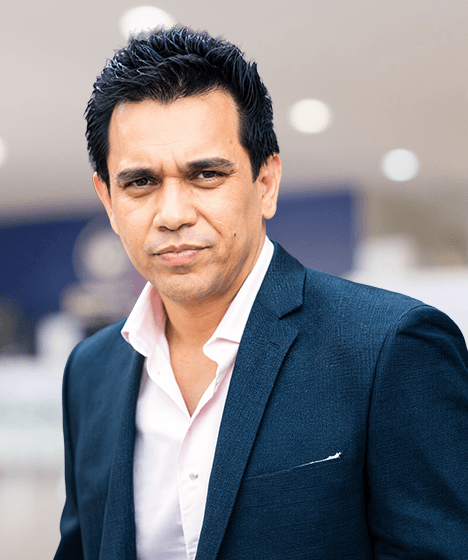
Mr Nurul Ahad
Consultant Orthopaedic Surgeon in East London & Essex
Mr Nurul Ahad provides specialist care for hip, knee, hand, wrist, foot & ankle conditions, including arthritis, sports injuries, joint pain & selected trauma-related concerns.
Why Choose Mr Nurul Ahad for Joint Fusion Surgery in East London & Essex?
Choosing an experienced orthopaedic surgeon is essential when considering joint fusion surgery. Mr Nurul Ahad is a respected Consultant Orthopaedic Surgeon known for delivering precise and patient-focused care.
Why do patients trust Mr Ahad:
- Expertise in treating advanced arthritis and complex joint conditions
- Skilled in performing joint fusion (arthrodesis) procedures across multiple joints
- Focus on relieving pain and restoring joint stability
- Individualised treatment and recovery plans
- Commitment to patient safety and optimal surgical outcomes
- Accessible care for patients in East London, Essex, and nearby communities
Mr Ahad’s goal is to help you achieve lasting pain relief and improved quality of life when other treatments are no longer effective.
FAQs – Joint Fusion Surgery in East London & Essex
What is joint fusion surgery?
Joint fusion (arthrodesis) is a procedure where two bones are permanently joined to eliminate movement in a painful or damaged joint.
When is joint fusion recommended?
It is typically recommended for severe arthritis, joint instability, deformity, or trauma that has not responded to non-surgical treatments.
Will I lose movement after joint fusion?
Yes, the fused joint will no longer move. However, the procedure is designed to relieve pain and improve overall function.
How long does recovery take?
Recovery time varies depending on the joint involved but may take several weeks to a few months for complete healing and bone fusion.
Will I need physiotherapy after surgery?
Yes, physiotherapy helps strengthen surrounding muscles and improve overall mobility and function.
What are the risks of joint fusion surgery?
Risks may include infection, nerve injury, non-union (failure to fuse), or hardware complications, though these are carefully managed.
Book Your Joint Fusion Consultation in East London or EssexEast London, Essex
If chronic joint pain or instability affects your daily life, expert care is available locally. Mr Nurul Ahad, Consultant Orthopaedic Surgeon, offers specialised joint fusion surgery services in East London, Essex, and surrounding areas.
Take the next step towards lasting pain relief and stability.
Contact the clinic today to schedule your consultation and explore your treatment options.
Reduce pain. Restore stability. Improve your quality of life.